
If you’ve spent any time around casino games, you’ve probably heard the phrase house edge thrown around constantly.
“The house always wins.”
“This slot has a terrible edge.”
“Blackjack has one of the lowest house edges in the casino.”
But what does house edge actually mean?
More importantly, why should you care?
Understanding house edge is one of the biggest differences between casual gamblers who blindly throw money around and smart players who actually understand how casino games work. Whether you enjoy slots, blackjack, roulette, poker, baccarat, or sports betting, learning how house edge works can completely change the way you approach gambling.
And here’s the interesting part…
The casino doesn’t need to cheat to make money.
The math already guarantees they’ll profit over time.
That’s the real secret behind casinos.
In this guide from casino north star, we’re going to break down exactly what house edge means, how it works, why it matters, and which games give players the best and worst odds. We’ll also cover common myths, mistakes players make, and how smart gamblers use this knowledge to stretch their bankrolls and make better decisions.
Let’s step inside the casino and uncover what’s really happening behind the flashing lights and spinning wheels.
What Is House Edge?
In the hustle and bustle of a casino, every spin of the wheel or roll of the dice carries with it a hidden cost called the ‘house edge.’ But what’s the deal with it? Think of it as a tiny fee the casino charges you for the entertainment. It’s not about cheating or rigging the games; it’s this little edge that guarantees the house makes money in the long haul.
At its core, the house edge is the average gross profit the casino expects to make from each game. That blackjack table you love? The casino assigns a percentage (usually a small one) to favor them over you, just a bit. This doesn’t mean you can’t win, but on a large scale and over time, the house edge ensures the casino has the upper hand.
The house edge isn’t the villain of the story, but rather a guide showing how casinos stay in business. By understanding it, you empower yourself as a player, making smarter bets and enjoying the games with a broader perspective. Some folks think it means games are rigged, but that’s not the case. It’s just math, plain and simple – the casino’s friendly reminder that the house always wins!
At its core, house edge is the mathematical advantage the casino has over players over the long run.
It’s usually expressed as a percentage.
For example:
If a game has a 1% house edge, the casino expects to keep about $1 for every $100 wagered over time.
If a game has a 10% house edge, the casino expects to keep about $10 for every $100 wagered over time.
That doesn’t mean you lose exactly that amount every session.
You could:
Win big
Break even
Lose quickly
Go on a lucky streak
But over thousands and thousands of bets, the math slowly favors the casino.
That’s why casinos can build giant resorts, offer free drinks, and still make billions every year.
The edge is built directly into the games.

The House Edge: Is It A Scam?
A lot of newer players assume house edge means casinos are rigged.
That’s not really accurate.
Legitimate casinos don’t need to manipulate games because the built-in probabilities already favor them.
Think about it this way:
If you flip a fair coin, both sides have a 50% chance.
But casinos rarely offer truly even odds.
Instead, they tweak payouts slightly so the math leans in their favor.
Over enough bets, that tiny advantage becomes massive profit.
This is why casinos love volume.
The more people play…
The longer they play…
The more the math works.
That’s also why understanding house edge is incredibly important if you want to gamble responsibly and intelligently.
How House Edge Actually Works
Let’s make this simple.
Imagine a game where:
You bet $1
You have a 50% chance to win
Winning pays $2 total ($1 profit + your original dollar back)
That game would have no house edge.
The casino wouldn’t make money.
Now imagine the casino changes the payout slightly:
You still have a 50% chance to win
But now winning only pays $1.90 instead of $2
Suddenly, the casino has an edge.
That small difference might not feel important in one bet, but over thousands of wagers it becomes enormous.
That’s how casinos operate:
Small mathematical advantages
Massive betting volume
Long-term consistency
The casino doesn’t care if you win tonight.
They care that millions of bets happen over time.
Why House Edge Matters More Than Most Players Realize
Most players focus almost entirely on:
Big jackpots
Bonus features
Excitement
Winning streaks
But experienced gamblers often focus on:
Expected value
Payout percentages
Volatility
House edge
Why?
Because house edge directly impacts:
How long your bankroll lasts
Your chances of winning over time
How quickly losses accumulate
Which games are smarter to play
A player who understands house edge usually makes far better gambling decisions than someone chasing random hot streaks.
House Edge vs RTP: What’s the Difference?
You’ll often hear another term in casino games:
RTP, or Return to Player.
RTP is basically the opposite of house edge.
Here’s the formula:
House Edge + RTP = 100%
So:
A slot with 96% RTP has a 4% house edge
A blackjack table with a 0.5% house edge has a 99.5% RTP
Casinos often advertise RTP because it sounds friendlier.
“96% return to player!” sounds much better than:
“The casino keeps 4%.”
But they mean essentially the same thing.
Examples of House Edge in Popular Casino Games
Now let’s look at how house edge varies between different games.
This is where things get really interesting.
Blackjack: One of the Lowest House Edges
Typical House Edge:
Around 0.5% with proper strategy
Blackjack is famous for having one of the best odds in the casino.
But there’s a catch:
That low edge only applies if you use proper basic strategy.
If you play emotionally or make random decisions, the edge rises significantly.
That’s why skilled blackjack players:
Learn charts
Understand probability
Avoid bad side bets
Stay disciplined
Blackjack is one of the few casino games where player decisions genuinely matter.
Baccarat: Surprisingly Good Odds
Typical House Edge:
Banker bet: around 1.06%
Player bet: around 1.24%
Tie bet: terrible odds
Baccarat has an elegant reputation, but the game itself is actually very simple.
Most experienced players stick almost exclusively to:
Banker bets
Player bets
The tie bet may look tempting because of the larger payout, but it carries a much worse house edge.
This is a perfect example of casinos using flashy payouts to lure players into mathematically weaker bets.
Roulette: Depends on the Wheel
House edge changes dramatically depending on the version.
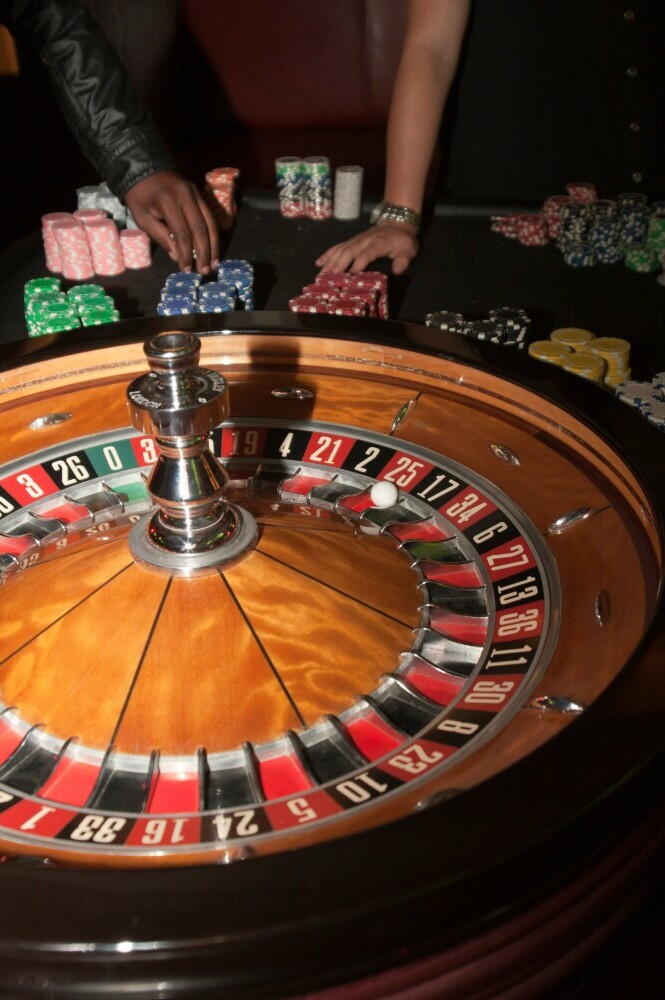
European Roulette
House edge: around 2.7%
American Roulette
House edge: around 5.26%
Why the huge difference?
Because American roulette has an extra “00” pocket.
That tiny addition nearly doubles the casino’s advantage.
This is one of the most important examples of why understanding house edge matters.
Two games may look almost identical…
…but one is far worse mathematically.
Whenever possible, smart players choose European roulette.
Slots: Huge Variety in House Edge
Slots are where things become tricky.
Typical house edge:
Around 2% to 15% or more
Some modern online slots have surprisingly decent RTPs around 96–97%.
Others are much worse.
The problem is that many players don’t even check.
Slots are designed around:
Entertainment
Excitement
Visual stimulation
Bonus rounds
Near misses
And they work incredibly well at keeping people spinning.
Slots can absolutely produce massive wins…
…but they also tend to drain bankrolls faster than lower-edge table games.
Craps: Surprisingly Player-Friendly (Sometimes)
Craps looks intimidating, but some bets are actually excellent.
Good Bets
Pass Line
Don’t Pass
Come bets
These often have low house edges.
Terrible Bets
Hardways
Proposition bets
One-roll bets
These flashy center-table bets can carry enormous house edges.
This is another common casino strategy:
Place the worst bets in the most exciting-looking areas.
Experienced craps players usually stick to the simpler bets with better odds.
Poker Is Different
Poker deserves special mention because most forms of poker are not played against the house.
Instead:
Players compete against each other
The casino takes a rake (small fee)
That means poker isn’t purely about house edge.
Skill matters enormously.
A strong poker player can actually become profitable over time.
That’s very different from most casino games, where the math almost always favors the house long-term.
Sports Betting and the Hidden House Edge
Sports betting has house edge too.
It’s built into the odds.
For example:
Standard -110 betting odds force players to risk $110 to win $100
That extra $10 is part of the sportsbook’s edge.
To become profitable long-term, sports bettors must win at a very high percentage.
Most casual bettors underestimate how difficult that actually is.
The Intricate Mechanics: How House Edge is Calculated
Understanding the house edge is a bit like solving a puzzle. It’s not just a random number thrown out there; it’s a carefully crafted calculation that ensures games remain sustainable for casinos while keeping the fun rolling for players. The math behind it can look complicated, but at its heart, it’s straightforward probability baked into the game design.
Take roulette, for example. With those green zeroes on the wheel, the odds of winning aren’t exactly fifty-fifty like you’d find in a coin flip. Those zeroes are why the casino keeps its edge, tipping the scales ever so slightly in their favor. Blackjack, on the other hand, varies a lot more. Strategies can affect its house edge, giving savvy players a potential leg up.
Different casino games have different house edges. Slot machines often have a wide range, from a hefty 10% in some places to a much more lenient 2% in others. A game like craps has different bets offering different odds and edges. When you’re eyeing that glamorous game floor, keeping an eye on these numbers can ensure you’re not just leaving things to chance.
For players, understanding these mechanics isn’t about cracking the secret to winning, but about appreciating the art of gameplay and making informed choices. The house edge is like a GPS on your casino adventures, showing where you might encounter more bumps or smoother riding. Knowing how it works not only enriches your gaming experience but also helps you play smarter.
Empowering Players: Using House Edge Knowledge to Your Advantage
Turning the house edge into your ally is easier than you might think. By identifying games with lower house edges, you’re already on the path to smarter gambling. Games like blackjack or baccarat often offer a more player-friendly house edge, meaning you’ve got a better shot at stretching that bankroll.
It’s wise to take this knowledge and build strategies around it. In games where skill meets chance, like poker, honing techniques and strategies isn’t just beneficial—it’s practically a must. Small changes like learning basic strategy in blackjack or betting wisely in craps can chip away at that house edge, giving you a bit more leverage.
When you’re selecting games, looking beyond the glitter and glamour can pay off. Focus on games not just for their entertainment value but for those mathematical advantages, too. Sometimes, slot machines are irresistible, but when you want better odds, shifting to table games might be in your best interest.
A responsible gambling mindset will also include balancing fun with the seriousness of the game. Set limits on how much you’re willing to bet and stick to that plan. This ensures that you remain entertained, without overstretching your budget.
With this knowledge in hand, you’re navigating the casino floor like a pro, approaching each game with a balance of excitement and strategy. This isn’t just about minimizing loss; it’s about maximizing enjoyment while keeping a keen eye on that house edge.
The Dangerous Trap of High House Edge Games
Casinos know people love:
Huge jackpots
Massive payouts
Exciting side bets
That’s why many high-edge games look incredibly attractive.
Examples include:
Keno
Lottery-style casino games
Side bets in blackjack
Tie bets in baccarat
Certain slot features
These often carry brutal house edges.
The flashy payout distracts players from the underlying math.
A game promising a giant jackpot usually compensates by giving the casino a larger long-term advantage.
Variance vs House Edge
Here’s something many beginners misunderstand:
House edge does NOT determine short-term outcomes.
Variance does.
That means:
You can win big in a high-edge game
You can lose quickly in a low-edge game
House edge only predicts long-term averages.
That’s why casinos are comfortable letting players hit jackpots.
Randomness creates short-term chaos…
…but the long-term math still favors the casino.
Why Some Players Think They’re “Beating the Casino”
Almost every casino regular has experienced:
Winning streaks
Hot tables
Lucky nights
And that’s completely normal.
Short-term luck is real.
But many players mistake short-term success for a winning system.
The problem?
House edge operates over time.
The longer someone plays, the more the mathematical advantage tends to show itself.
That’s why casinos love players who:
Chase losses
Stay for hours
Increase bets emotionally
Believe streaks can be predicted
Emotion usually benefits the house.
Discipline usually benefits the player.
Common Myths About House Edge
Let’s clear up a few major misconceptions.
Myth #1: “A Machine Is Due to Hit”
This is one of the oldest gambling myths around.
Modern slot machines use RNGs (random number generators).
Each spin is independent.
The machine does not “owe” anyone a jackpot.
A cold machine can stay cold.
A hot machine can suddenly stop paying.
Randomness doesn’t have memory.
Myth #2: “You Can Beat Roulette With a System”
Systems like:
Martingale
Fibonacci
Labouchere
…sound clever, but they don’t remove house edge.
They only change betting patterns.
The underlying probabilities remain the same.
Over time, the casino advantage still exists.
Myth #3: “Higher Bets Improve Your Odds”
Bet size changes volatility and potential winnings.
It usually does NOT change the house edge.
Betting bigger simply means:
Bigger swings
Faster bankroll movement
Greater risk
Myth #4: “Casinos Manipulate Games in Real Time”
Licensed casinos operate under strict regulations and testing.
The games are already profitable mathematically.
They don’t need to secretly adjust outcomes to make money.
That said, players should still stick to reputable, licensed casinos.
Smart Ways to Gamble With House Edge in Mind
Understanding house edge doesn’t mean gambling becomes boring.
It just means you approach it intelligently.
Here are some practical strategies.
1. Choose Lower House Edge Games
If your goal is longer playtime and better odds:
Blackjack
Baccarat banker bets
European roulette
Smart craps bets
…are usually better choices than high-edge games.
2. Avoid Bad Side Bets
Side bets are often where casinos hide massive edges.
They look exciting…
…but many are mathematically terrible.
If you want better odds, stick to core bets.
3. Learn Basic Strategy
Especially in blackjack.
Proper strategy can dramatically reduce the casino advantage.
Playing randomly gives the house much more money over time.
4. Manage Your Bankroll
Even low-edge games can destroy reckless players.
Set:
Spending limits
Session limits
Win goals
Loss limits
Smart bankroll management is one of the most underrated gambling skills.
5. Gamble for Entertainment First
This is extremely important.
Even low house edge games still favor the casino eventually.
Casino gambling should be viewed primarily as entertainment — not guaranteed income.
Players who understand this tend to make far healthier decisions.
Why Casinos Want You to Ignore House Edge
Casinos rarely advertise house edge directly.
Instead, they promote:
Big jackpots
Luxury experiences
Bonus offers
Excitement
Emotional highs
Why?
Because emotional decisions are usually more profitable for the house than logical ones.
The more distracted players become, the less likely they are to think mathematically.
That’s why educated gamblers often:
Play slower
Stay calmer
Make more deliberate choices
Avoid emotional chasing
Knowledge changes behavior.
Can You Actually Beat the House?
In most casino games:
Not consistently over the long run
But there are exceptions.
Some players can gain advantages through:
Poker skill
Sports betting expertise
Advantage blackjack techniques
Promotions and bonuses
Arbitrage opportunities
However, these require:
Discipline
Study
Bankroll management
Emotional control
For casual players, gambling should still primarily be entertainment.
The Psychology Behind House Edge
Casinos are masters of psychology.
Everything is designed to keep players engaged:
Lights
Sounds
Near misses
Bonus animations
Free drinks
Comfortable seating
Constant stimulation
And when combined with house edge, this creates an incredibly profitable environment.
The goal isn’t to make every player lose immediately.
The goal is to keep people playing long enough for the math to work.
That’s the real casino business model.
The Best Mindset for Casino Gambling
The smartest gamblers usually share a similar mindset:
They understand the math
They accept the risks
They avoid emotional decisions
They treat wins as temporary
They play within limits
Ironically, players who understand house edge often enjoy gambling more responsibly because they have realistic expectations.
They aren’t chasing fantasies.
They’re enjoying the experience while respecting the probabilities involved.
Final Thoughts: The Art of Playing Smart in the Casino World
Embracing the house edge as a tool rather than a hindrance marks a shift in how you experience casino games. The knowledge gained from understanding its role can lead to more informed gaming choices, helping you find the right balance between strategy and entertainment.
Evaluating personal habits in light of the house edge can transform your approach to gambling. It’s about combining the thrill of the game with a clear-headed view of the odds involved, turning gambling from a risky leap into a calculated decision.
Intelligent gambling is about more than just numbers; it’s about having a keen sense of timing and limits. Regularly reassessing your playstyle can lead to improved gaming experiences, reducing the impact of losses while enhancing the joy of wins.
As casinos continue evolving, so too does the house edge. New games and variations frequently bring changes to these metrics, inviting players to stay informed and adaptable. Whether you’re a casual player or a casino enthusiast, being aware of these shifts can enhance your gameplay.
With each hand dealt and each spin of the wheel, understanding the house edge offers the player a taste of control in a dynamic environment. The world of casino gaming is rich with possibility, and with the right mindset, you can ensure that every gaming session is both thrilling and wise.
House edge is one of the most important concepts in all of gambling.
Once you understand it, casino games start to make much more sense.
You begin to see:
Why some games are better than others
Why certain bets are traps
Why bankrolls disappear quickly
Why casinos always seem to profit over time
And most importantly…
You stop gambling blindly.
That doesn’t mean you can’t have fun.
It doesn’t mean you can’t win.
And it definitely doesn’t mean you can’t enjoy casino games responsibly.
But understanding house edge helps you become a smarter, more informed player. And in the world of casino gambling, knowledge is one of the few real advantages players actually have.
Play Responsibly
Casino games are designed for entertainment, not guaranteed profit. Always gamble responsibly, set limits before you play, and never risk money you can’t afford to lose. If gambling stops being fun or begins affecting your finances, relationships, or mental health, it may be time to step away and seek support.