
Blackjack has been rocking the casino world for ages. It’s not just about luck; there’s a thrill and strategy that make it so appealing. This game blends skill, chance, and a bit of daring, turning those cards into a high-stakes adventure.
In the heart of the game lies a pretty straightforward goal: beat the dealer’s hand without going over 21. Sounds simple, right? But there’s more to it. You start with two cards, then face the crucial choice—add more cards to your hand or stick with what you’ve got.
We’re talking about decisions that could see you double your money or crash out, so every choice counts. And Casino North Star wants to help you make the best choices to increase your odds of winning at blackjack, so we made the ultimate blackjack guide for beginner players looking to learn how to play, as well as players looking to refresh their knowledge of the game.
Knowing the lingo is crucial when you’re making these judgment calls. You’ll hear players throw around terms like ‘Hit,’ ‘Stand,’ ‘Double Down,’ ‘Split,’ and ‘Bust.’ They’re not just random words—they’re actions that guide each play you make. Grasping these will definitely get you more comfortable at the table.
And then there’s the dealer, who isn’t just dealing out cards. The dealer stands as both opponent and guide, controlling the swing of the game. The rules they’ve got to follow affect every decision you make, so understanding their role and actions helps you strategize better.
Blackjack is one of the best casino games for beginners because it’s simple to learn, fast to play, and (with the right strategy) it can actually be one of the fairest games in the casino.
But here’s the thing…
Blackjack is also the game where people confidently say things like:
“I always hit 16.”
“You’re supposed to feel the cards.”
“The dealer is due for a bust!”
…and then proceed to donate their money to the felt table like it’s a charity fundraiser.
So in this guide from Casino North Star, we’re doing it the right way.
You’ll learn:
✅ The rules of blackjack (in plain English)
✅ What the dealer does and why it matters
✅ What “hit,” “stand,” “double,” and “split” actually mean
✅ A beginner-friendly basic strategy you can use immediately
✅ Mistakes to avoid (that cost people money every day)
✅ A quick “cheat sheet” you can memorize fast
Let’s turn you into a calm, confident blackjack player… instead of someone sweating over a 15 like it’s the final boss fight.

What Is Blackjack? (The Goal of the Game)
Blackjack is a card game where you play against the dealer, not the other players.
Your goal is simple:
✅ Get as close to 21 as possible without going over.
If your hand beats the dealer’s hand without busting (going over 21), you win.
If you bust, you lose instantly.
If the dealer busts and you didn’t, you win.
If you and the dealer tie, it’s a push (you get your bet back).
That’s it. That’s blackjack in a nutshell.
Blackjack Card Values (Super Easy)
Here’s how cards are counted in blackjack:
2–10 = face value
(a 6 is worth 6, a 9 is worth 9, etc.)
J, Q, K = 10 points each
Ace (A) = 1 point or 11 points
(whichever helps your hand the most)
Example Hands:
A + 9 = 20 (great hand)
A + 6 = 17 (this is called a “soft 17,” more on that later)
K + 7 = 17
9 + 8 + 6 = 23 → bust
Essential Rules Every Beginner Should Know
When stepping up to play, knowing the basic rules is like having a secret weapon. These guidelines shape every move on the table, laying the groundwork for smart, strategic plays.
Here’s a key point: the dealer has to follow strict rules. For example, they’re usually required to hit until they get a hand worth at least 17. This is good to know because it affects your strategic decisions—sometimes it’s wiser to stand pat and wait for the dealer to bust.
Not every Blackjack table is created equal. Different casinos might throw in unique twists with their variations, impacting how you play each round. Always check the specific table rules before sitting down to avoid any surprise twists.
A winning hand payout generally sticks to the trusty 3:2 ratio, but not always. Watch out for those tables offering 6:5 payouts instead. It might seem minor, but over time it’ll affect your winnings. Also, keep an eye on the betting limits to ensure you’re playing at a table that fits your budget.
Don’t overlook those ‘extra’ rules like insurance, surrender, or playing soft hands with aces. They might not pop up often, but knowing how to handle them can give you an edge. Insurance can be a tricky bet to recommend—it’s often best left unless you’re sure it’s beneficial.
The Best Hand in Blackjack: A Natural Blackjack
A “blackjack” (also called a natural) is when your first two cards equal 21:
✅ Ace + 10-value card (10/J/Q/K)
So:
A + 10 = 21
A + K = 21
A + Q = 21
What happens if you get blackjack?
You usually get paid 3:2.
So if you bet $10:
You win $15 profit
And you get your $10 bet back
Total return = $25
⚠️ Some casinos pay 6:5 instead of 3:2, which is worse for players.
If you can choose, ALWAYS play 3:2 blackjack when possible.

Basic Blackjack Rules (Step-by-Step)
Let’s walk through a typical blackjack hand.
1) You place your bet
You decide how much you want to wager on the hand.
2) Everyone gets two cards
You get two cards
The dealer gets two cards:
One card face-up (upcard)
One card face-down (hole card)
3) You decide what to do
You choose how to play your hand:
Hit
Stand
Double down
Split (if applicable)
Surrender (sometimes)
4) Dealer plays after players finish
Once all players are done, the dealer reveals their hidden card and finishes their hand according to fixed rules.
Blackjack Player Options (Your Moves)
✅ Hit
Take another card.
You hit when your hand total is too low and you want a better chance to beat the dealer.
Example:
You have 12
Dealer shows 10
You’ll probably hit (we’ll explain why in strategy)
✅ Stand
Keep your hand as-is and end your turn.
Example:
You have 20
Dealer shows 6
You stand (and feel like a genius)
✅ Double Down
You double your original bet and receive exactly one more card, then you must stand.
Example:
You bet $10
You double down
Your total bet becomes $20
You get one card only
Doubling down is one of the most powerful moves in blackjack because it lets you “press” your advantage when you’re likely ahead.
✅ Split
If your first two cards are the same rank (like 8-8 or A-A), you can split them into two separate hands.
Your bet is doubled (you place a second equal bet)
Each card becomes the start of a new hand
You play each hand separately
Example:
You have 8 and 8
You split
Now you have two hands, each starting with an 8
✅ Surrender (Not Always Available)
In some blackjack games, you can surrender your hand and lose only half your bet.
This is basically the casino version of saying:
“Yeah… I’m not winning this one.”
And honestly? Sometimes surrendering is the smart play.

Dealer Rules (And Why They Matter)
The dealer doesn’t make choices the way you do.
They follow strict rules, usually:
Dealer must hit until they have 17 or more
Dealer must stand on 17 or more
Here’s where it gets spicy:
Dealer Hits Soft 17 vs Stands on Soft 17
A “soft 17” is a hand like:
A + 6 = 17
Because the ace can be counted as 11 without busting.
Some casinos require the dealer to hit soft 17 (H17 rule), which slightly increases the house edge.
✅ Player-friendly rule: Dealer stands on soft 17 (S17)
Less player-friendly: Dealer hits soft 17 (H17)
If you ever see that posted on a blackjack table sign, now you know why serious players care.
Hard Hands vs Soft Hands (Big Beginner Breakthrough)
This is one of the most important concepts in blackjack.
Hard Hand
A hand with no ace, or an ace counted as 1.
Examples:
10 + 7 = hard 17
9 + 6 = hard 15
A + 6 + 10 = 17 (the ace must count as 1 here, so it’s hard 17)
Soft Hand
A hand with an ace counted as 11.
Examples:
A + 6 = soft 17
A + 3 = soft 14
A + 7 = soft 18
Soft hands are more flexible because you can hit without immediately risking a bust.

What Is Basic Blackjack Strategy?
Basic strategy is the mathematically best way to play blackjack based on:
Your hand total
The dealer’s upcard
It doesn’t guarantee you win every hand (nothing does), but it gives you the highest possible chance over time.
Think of it like GPS for blackjack.
You can still get stuck in traffic, but you’re using the best route.
Every Blackjack game brings a new adventure, but sticking to a basic strategy turns that adventure into something profitable. It’s all about knowing the right play based on your hand and the dealer’s card.
The core of Blackjack strategy revolves around when to hit, stand, split, or double down. These decisions might seem straightforward, but there’s a proven blueprint for each situation.
Use strategy charts—they’re essential guides showing the best moves depending on the dealer’s upcard.
Understanding the dealer’s position is critical. Your strategy should factor in what the dealer might have under their face-up card. It’s like chess, anticipating their moves, and adjusting your strategy accordingly is a game-changer.
Now, let’s talk decks. Casinos sometimes use multiple decks and have different shuffle techniques to throw players off the scent of card counting. Knowing the deck count helps in tweaking your strategies, especially when estimating probabilities.
The basic strategy isn’t a sure-fire way to win each hand, but it levels the playing field and reduces the house edge. When you follow it to the letter, you’re maximizing your chances of beating the dealer more often than not.

Blackjack Basic Strategy (Beginner-Friendly Version)
Instead of dumping a complicated chart on you immediately, I’m going to give you the simplest, most useful rules first.
Once you understand these, the chart becomes easy.
Step 1: Always Stand on 17+ (Almost Always)
If you have:
✅ 17, 18, 19, 20, or 21
You almost always stand.
Because you’re already in strong territory.
The only time strategy gets tricky is soft hands (like A-7) and doubling opportunities.
But for a beginner?
If you have 17+, standing is your default.
Simple.
Step 2: Always Hit 8 or Less
If your hand is:
✅ 8 or lower
Always hit.
You’re too low to win without improving.
Step 3: Learn the “Dealer Danger Cards”
The dealer’s upcard matters more than you think.
Dealer “Weak” Cards (Good for you)
✅ 2, 3, 4, 5, 6
These cards are weak because the dealer is more likely to bust while trying to reach 17.
When dealer shows 2–6:
👉 You can often stand more, even with totals like 12–16.
Dealer “Strong” Cards (Bad for you)
⚠️ 7, 8, 9, 10, Ace
These cards are strong because the dealer has a higher chance of ending with 17–21.
When dealer shows 7-A:
👉 You usually need to hit more to improve your hand.
Step 4: What to Do With 12–16 (The Most Hated Hands)
Let’s be honest…
This range is where blackjack players start bargaining with the universe.
You have a 14, dealer shows a 10, and you’re thinking:
“Surely I can just stand and hope they… get tired?”
No.
Here’s the beginner-friendly rule that gets you most of the way there:
Hard 12–16 Strategy (Easy Version)
✅ If the dealer shows 2–6 → Stand
Because the dealer is likely to bust.
✅ If the dealer shows 7–Ace → Hit
Because the dealer is likely to make a strong hand.
This alone will save you so many bad decisions.
Examples:
You have 13, dealer shows 5 → ✅ stand
You have 16, dealer shows 10 → ✅ hit
You have 12, dealer shows 4 → ✅ stand
You have 15, dealer shows Ace → ✅ hit
And yes—hitting 16 vs 10 feels like walking into a movie where the villain always wins.
But statistically, it’s the best move.
Step 5: What to Do With 10 and 11 (Double Down Time)
Doubling down is how blackjack players squeeze extra value out of favorable situations.
✅ Double Down on 11 (Almost Always)
If you have 11
👉 Double down vs dealer 2–10
(Some strategies hit vs Ace depending on rules)
Why? Because you have a great chance to land a 10-value card and make 21.
✅ Double Down on 10
Double down when the dealer shows:
👉 2–9
If the dealer shows 10 or Ace:
👉 usually just hit
✅ Double Down on 9
Double down when the dealer shows:
👉 3–6
Otherwise hit.
Step 6: Soft Hands (Ace Hands) Strategy
Soft hands are fun because you can be aggressive without busting immediately.
Soft 13–16 (A-2 through A-5)
In general:
Hit unless you can double against weak dealer cards (4–6 or 5–6 depending)
Soft 17 (A-6)
Double vs dealer 3–6 (if allowed)
Otherwise hit
Soft 18 (A-7)
This is a classic.
Stand vs dealer 2, 7, 8
Double vs dealer 3–6
Hit vs dealer 9, 10, Ace
Soft 19+ (A-8 and A-9)
Usually stand
Sometimes double soft 19 vs dealer 6 (optional)
If you remember soft 18 rules, you’ll already be ahead of most casual players.
Splitting Pairs (The “Never Split 10s” Rule)
Splitting can be a power move or a disaster depending on the cards.
Here are the most important pair rules for beginners:
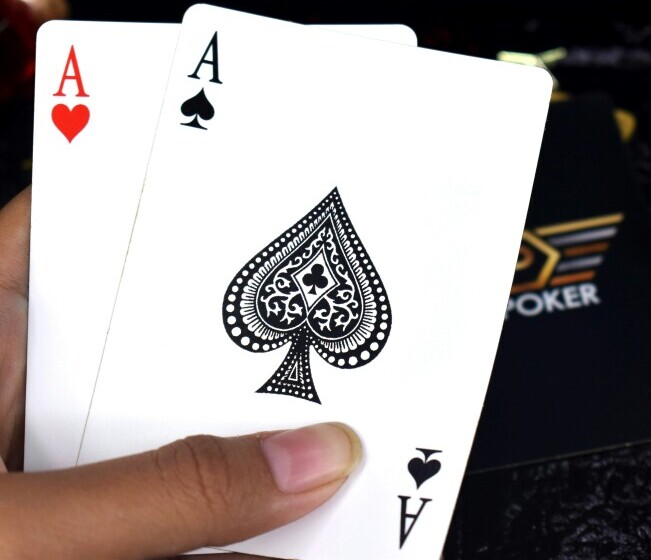
✅ Always Split Aces
A-A is incredibly powerful because each Ace can become the start of a great hand.
(A + 10 = blackjack-like strength
✅ Always Split 8s
8-8 equals 16 (which is awful).
Splitting turns one bad hand into two potentially strong hands.
Even against a dealer 10, splitting 8s is usually still correct.
✅ Never Split 10s
10-10 equals 20.
20 is a monster hand.
If you split it, you’re breaking up a great situation because you got bored.
Don’t do it.
✅ Never Split 5s
5-5 is 10.
That’s a perfect doubling down hand in many situations.
Splitting makes it worse.
Usually Split 2s, 3s, 6s, 7s, 9s (Depending on Dealer Card)
Here’s the simplified version:
Split 2s and 3s vs dealer 2–7
Split 6s vs dealer 2–6
Split 7s vs dealer 2–7
Split 9s vs dealer 2–6, 8–9
(but stand vs 7, 10, Ace)
If that feels like too much right now, no problem.
Just remember:
✅ Aces and 8s = always split
❌ 10s and 5s = never split
That’s the beginner core.
Quick Blackjack Cheat Sheet (Beginner Edition)
If you want a quick “mental checklist”:
✅ Always:
Stand on 17+
Hit on 8 or less
Split Aces and 8s
Never split 10s or 5s
✅ If dealer shows 2–6:
Stand more often (especially 12–16)
Double down aggressively with 9–11
✅ If dealer shows 7–Ace:
Hit more often (especially 12–16)
Be cautious with doubling unless you’re strong
Always stand: 17+
Always hit: 8 or less
12–16: stand vs dealer 2–6, hit vs 7–Ace
Double down:
11 vs almost anything
10 vs dealer 2–9
9 vs dealer 3–6
Always split: Aces and 8s
Never split: 10s and 5s
Never take insurance (as a beginner)

Common Blackjack Mistakes and How to Avoid Them
Newbies often trip on the same pitfalls, and avoiding these can make your Blackjack journey much smoother. One of the most common missteps? Drifting away from basic strategy in the heat of the moment. Stick with what works—over time, it’ll pay off.
Emotions can cloud your judgment at the tables faster than you can say ‘jackpot.’ It’s easy to chase losses or get carried away when winning, but rash decisions rarely end well with Blackjack. Maintaining a cool head helps keep you on track.
Many enter the casino with grand tales of card counting, inspired by movies and legends. For a beginner, this isn’t just tough—it’s daunting and it’s not even legal in most places. Instead, focus on honing core strategy skills before tackling advanced tactics like this.
You can’t talk Blackjack strategy without touching on bankroll management. Blowing through your stash too quickly is a rookie mistake that can quickly cut your fun short. Set a budget before you start playing and know when it’s time to walk away, win or lose.
1) “I’m going to stand on 16 vs 10 because I don’t want to bust”
Totally understandable.
But the problem is:
Standing doesn’t magically protect you.
If you stand on 16 vs 10, you’re basically betting:
“Dealer will bust.”
But the dealer often finishes strong.
So yes—hitting can feel gross…
…but standing is usually worse.
2) Taking “insurance”
If the dealer shows an Ace, they may offer insurance.
Insurance is a side bet that the dealer has blackjack.
It usually pays 2:1.
Sounds tempting, right?
But mathematically, insurance is almost always a bad deal for the player unless you’re counting cards (and even then it’s situational).
✅ Beginner rule: Never take insurance.
3) Chasing losses by raising your bet wildly
Blackjack has ups and downs, even with perfect strategy.
If you lose three hands in a row, it doesn’t mean the next one is guaranteed to win.
That’s called the gambler’s fallacy.
Stick to consistent bet sizing until you’re more experienced.
4) Ignoring table rules
Blackjack rules change the house edge a LOT.
Look for tables with:
✅ 3:2 payouts
✅ Dealer stands on soft 17 (S17)
✅ Double after split allowed (DAS)
✅ Late surrender (if you like strategy)
Avoid:
⚠️ 6:5 blackjack
⚠️ Dealer hits soft 17 (H17) if you have better options
Blackjack Etiquette (Yes, It’s a Real Thing)
Blackjack tables can get weirdly intense.
You’ll occasionally see someone blame you for “taking the dealer’s bust card.”
Let’s clear that up:
You are allowed to play your hand however you want.
You’re not responsible for someone else’s bet.
That said, if you want to avoid drama:
Play basic strategy
Don’t take 10 seconds on every decision
Don’t touch your cards in a shoe game (dealer deals face up)
Be respectful and tip occasionally if you’re winning
And if someone says:
“You ruined the flow of the cards!”
Smile politely and continue making the correct play.
How to Practice Blackjack Without Losing Money
Want to get good fast?
Here’s a simple way:
✅ Practice using a free blackjack app
Play with fake money and focus on decisions, not wins/losses.
✅ Memorize the “12–16 rule”
This is the biggest beginner breakthrough:
Dealer 2–6 → Stand
Dealer 7–Ace → Hit
✅ Learn 3 splits:
Always split Aces
Always split 8s
Never split 10s
✅ Learn doubles:
Always double 11
Double 10 vs 2–9
Double 9 vs 3–6
If you master those pieces, you’ll be playing better than 80% of casual blackjack players.

A Real Beginner Example Hand (Walkthrough)
Let’s do a quick practice scenario.
You have: 10 + 6 = 16
Dealer shows: 10
Your options:
Stand (hope for dealer bust)
Hit (risk busting)
Basic strategy says:
✅ Hit 16 vs 10
Because your chance of winning by standing is lower than by hitting—even though hitting feels scary.
Let’s say you hit and get a 4.
Now you have 20.
That’s how a “bad hand” turns into a great hand.
Another Example
You have: 10 + 2 = 12
Dealer shows: 4
Basic strategy says:
✅ Stand
Because dealer is in the danger zone (2–6), and you don’t want to risk busting yourself.
The dealer draws:
4 (hidden) + 4 (upcard) = 8
Hits: 10 → 18
Dealer ends with 18.
You lose.
And yes, it feels unfair.
But strategy isn’t about winning every hand—it’s about maximizing your odds across hundreds of hands.
Does Basic Strategy Actually Work?
Basic strategy doesn’t “beat” blackjack the way a cheat code beats a video game.
But it reduces the house edge dramatically.
That means:
You lose less over time
You last longer
You have a better chance of walking away a winner in a normal session
And if you’re building confidence as a beginner, it gives you something priceless:
✅ A clear plan instead of emotional decisions.
Perfecting Your Game: Advanced Tips for Beginners
Once you’re comfortable with the basics, it’s time to amp things up with some advanced insights. Practicing isn’t just for newbies. Even seasoned players spend time sharpening their skills on free online platforms. Learn the ropes in low-stakes games where the focus is on perfecting strategies without burning through cash.
When it comes to advancing your play, a bit of reading up can’t hurt. Check out what pro players advocate—there’s a wealth of real-world tips out there. Whether it’s about spotting table trends or reading the dealer, you’ll find nuggets of wisdom to improve your game day by day.
As you transition from beginner to a more proficient player, understanding advanced strategies becomes essential. Concepts like doubling down on certain hands or employing a soft-hand strategy can make a big difference in tight situations.
Discipline often goes unnoticed, but it’s a game-changer in Blackjack. Sticking to your strategy, even when luck doesn’t seem to be on your side, requires mental strength. Adopting mindfulness and keeping a positive outlook can help maintain focus, ensuring sharp decisions.
Final Thoughts: The Best Way to Win at Blackjack (Beginner Truth)
If you want the most honest advice:
✅ Blackjack is a game you can play smart
✅ Basic strategy gives you a real edge compared to random play
✅ You can enjoy it, stay calm, and avoid common traps
But also…
Blackjack is still gambling.
So play for fun, play within your budget, and don’t treat the table like your monthly income plan.
Think of it like this:
You’re not going to the casino to “make money.”
You’re going to pay for entertainment… and maybe leave with a bonus.
That’s the winning mindset.
Blackjack gets even more fun when you understand the bigger picture of how casino games work (and which ones are best for beginners). If you want the full breakdown, start with my Casino Games Guide (Beginner-Friendly). And because blackjack can tempt you into “just one more hand,” I also recommend reading Casino Bankroll Strategy for Beginners: How to Play Longer and Lose Less so you can stay in control and play smarter. When you’re ready to put what you learned into action, here are my picks for the Best Online Casinos for Beginners (Safe, Simple, Fast Payouts).
If gambling is no longer fun or feels difficult to control, help is available. In the U.S., you can contact the National Council on Problem Gambling by calling or texting 1-800-GAMBLER for free, confidential support and local resources.